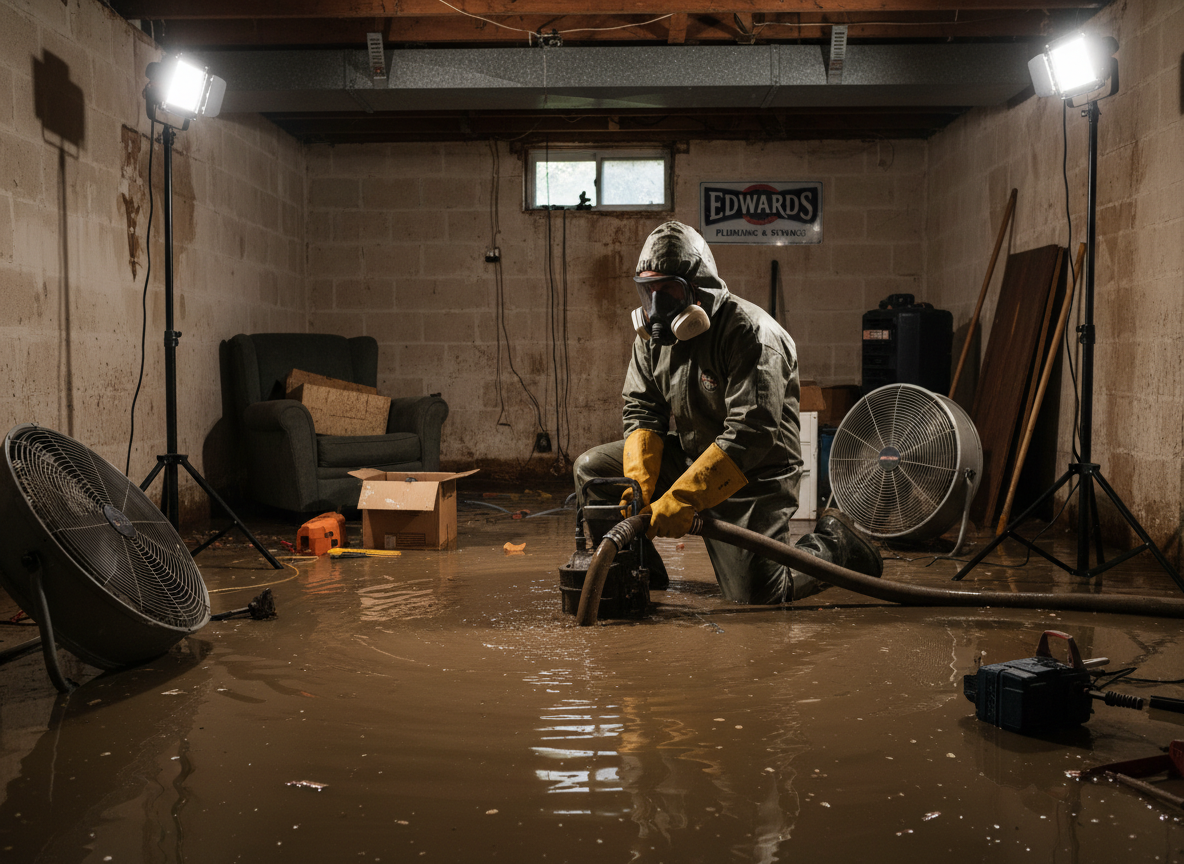
Sewage backups in Edwards often trace to aging pipes in base-adjacent housing stock built during earlier decades of Air Force development. High desert winters bring occasional cool rains that overwhelm older sewer lines running under slab foundations common around Edwards Air Force Base. Contaminated water migrates quickly through cracked concrete and into subfloor voids, creating hidden bacterial growth that standard drying methods miss. Technicians must isolate affected zones immediately to prevent cross-contamination into living spaces shared with neighboring units.
Extraction begins with truck-mounted pumps rated for Category 3 water, followed by removal of saturated drywall and insulation up to 18 inches above the water line per local health guidelines. In Mojave and Lancaster border areas the dry summer air accelerates surface drying yet leaves moisture trapped behind baseboards and in wall cavities near the 93524 zip code. Antimicrobial application targets both visible residue and aerosolized pathogens that can linger in low-wind conditions typical of the high desert. Final clearance testing confirms zero coliform counts before reconstruction.
Homeowners near Edwards Air Force Base frequently discover sewage intrusion only after noticing slow drains or musty odors during the first cool nights of fall. Soil composition in Kern County, heavy with clay pockets, slows natural drainage and forces water back toward foundations during rare but intense winter storms. Crews document every step with photos for insurance adjusters handling claims from military families who rotate through on short notice. Proper disposal follows Kern County environmental rules for biohazard transport away from the base perimeter.
Technician insight
In Edwards the thing that catches most people out with sewage cleanup is how winter rains pool against the clay-heavy soil around older base housing slabs, pushing contaminated water under walls instead of draining away like it does in sandier Mojave lots.
Slab Leak Backup Near The Base
A family in Edwards noticed foul odors after cool rains. Inspection revealed sewage seeping under the slab from a cracked line common in 1960s base housing. Crews extracted water, removed base trim and subfloor sections, sanitized the void, and dried the structure over several days until clearance tests passed.
How it works
- 1
Initial Assessment
Technicians arrive within hours, inspect for sewage extent using moisture meters and thermal imaging around slab foundations common in Edwards.
- 2
Containment And Extraction
Set up physical barriers, remove standing water with specialized pumps, and dispose of contaminated materials per Kern County regulations.
- 3
Cleaning And Sanitization
Apply EPA-registered antimicrobials to all affected surfaces including subfloors and wall cavities, then run HEPA air scrubbers.
- 4
Drying And Monitoring
Deploy commercial dehumidifiers suited to high desert conditions and monitor moisture levels until readings return to normal.
- 5
Final Clearance
Conduct post-cleanup testing and provide documentation for insurance before any reconstruction begins.
Pricing
Cost depends on square footage affected, depth of contamination, and whether structural materials must be removed; upfront quotes provided after inspection.