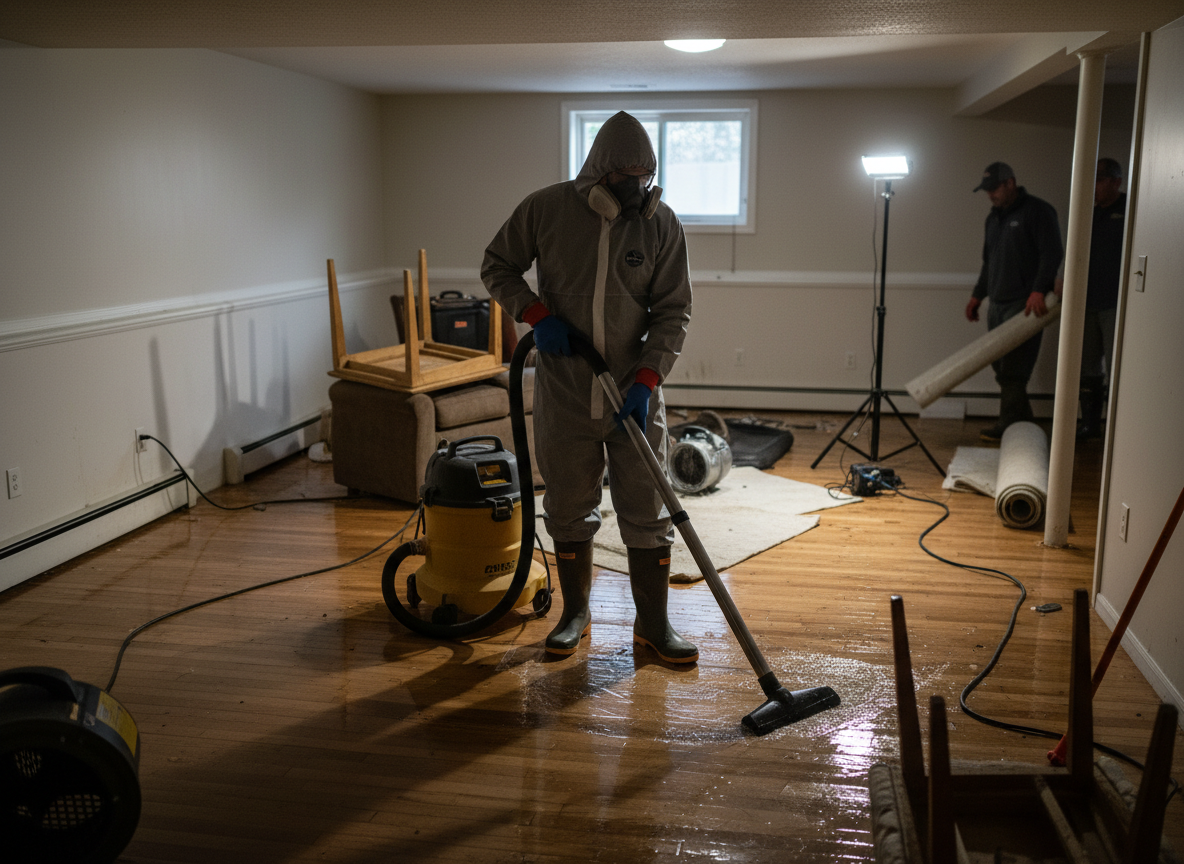
Edwards sits on high desert terrain where cool winter nights and occasional heavy rains can send water under slab foundations common in base housing built from the 1950s onward. Emergency water cleanup starts with locating the source, often a cracked supply line or failed water heater in older Mojave-adjacent properties, then removing standing water before it migrates into the sandy, low-drainage soil around Lancaster Road and 30 Nightingale Road.
Once extraction begins, technicians use truck-mounted pumps and air movers sized for the dry climate that evaporates surface moisture quickly but leaves hidden dampness inside walls and under flooring. In Edwards, where many homes have concrete slab construction, crews check for moisture behind baseboards and in HVAC ducts that run through attics exposed to extreme temperature swings between hot summer days and freezing winter nights.
Kern County regulations require proper disposal of contaminated water, so crews separate gray water from black water on site before hauling it away. Homeowners in Edwards often overlook how quickly desert dust mixes with standing water to create abrasive sludge that damages carpet padding and subfloors if not removed the same day.
After visible water is gone, dehumidifiers run for several days while moisture meters track levels in the thick stucco walls typical of base housing. This prevents mold that thrives when cool winter air meets residual dampness from summer monsoons.
Technician insight
In Edwards the thing that catches most people out with emergency water cleanup is the high desert soil that stays saturated for days after a winter storm or pipe burst, letting moisture wick back into slab edges long after the visible water is gone.
Slab Leak Under Base Housing
A supply line failed under a 1960s slab home near Edwards Air Force Base. Water had traveled under the floor into the living room and HVAC closet. Crews extracted the water, opened affected baseboards, and ran drying equipment for four days until meter readings stabilized. The homeowner avoided mold growth that often appears weeks later in the cool winter air.
How it works
- 1
Arrival and Safety Check
Technician arrives within the hour, shuts off water if needed, and identifies electrical hazards in the affected area.
- 2
Water Extraction
Standing water is pumped out using portable and truck-mounted equipment suited to slab and crawlspace homes common around Edwards Air Force Base.
- 3
Drying and Monitoring
Air movers and dehumidifiers are placed while moisture readings are taken daily until levels return to normal for the high desert climate.
- 4
Final Inspection
Hidden areas behind walls and under floors are checked before equipment is removed and the site is cleared.
Pricing
Upfront quotes after inspection; price depends on water volume, affected square footage, and whether hidden areas require demolition.