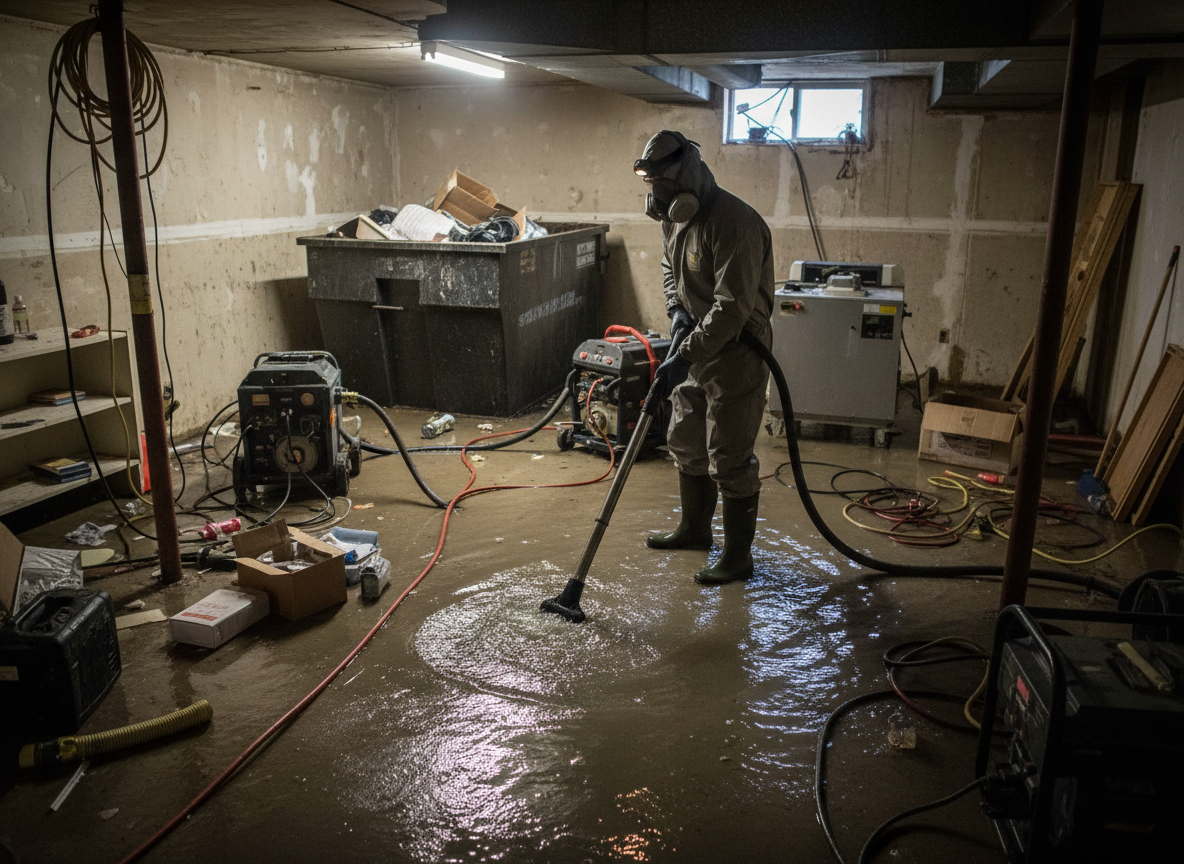
Edwards sits in Kern County high desert where cool winter rains and occasional summer monsoons hit hard against the sandy, fast-draining soil around Edwards Air Force Base. Older base housing and nearby single-story homes often have shallow basements or crawl spaces that collect water when storm drains along 30 Nightingale Road and surrounding streets back up. Once water enters, it soaks into concrete block walls and particleboard subfloors that were never meant for repeated wetting in this climate.
We extract standing water with truck-mounted pumps, then use industrial dehumidifiers sized for the low humidity swings typical here. Moisture meters check behind drywall and under carpet pads because desert air can mask hidden dampness that later grows mold. Homes near the base frequently have older galvanized pipes and minimal slope on lots, so we trace leaks to the source instead of stopping at the obvious puddle.
After drying, we treat affected framing with antimicrobial solutions rated for the alkaline soil dust that blows in from the Mojave side. Final clearance includes checking HVAC returns that pull air from basements, a common path for musty odors in Lancaster and Mojave homes that share the same wind patterns.
Local Drainage Realities
High desert flash flooding moves quickly across hard-packed lots but pools in low spots common around Edwards Air Force Base perimeter housing. We map these micro-drainage issues during every job so the same basement does not reflood after the next cool-season rain.
Technician insight
In Edwards the thing that catches most people out with basement flood cleanup is the sandy soil around Edwards Air Force Base that lets water disappear fast on the surface but keeps the lower block walls damp for weeks. Homeowners often think the job is done once the floor is dry, then the musty smell returns after the next cool winter rain because they skipped checking behind the baseboard.
Winter rain backup in base housing
Heavy cool-season rain overwhelmed the street drain near 30 Nightingale Road. Water entered a shallow basement through a low window well and wicked into drywall. We pumped out the water, dried the walls and slab over five days, then replaced the lower two feet of drywall and treated the framing. The basement stayed dry through the rest of the winter.
How it works
- 1
Emergency Assessment
Arrive within the hour, locate water source, and measure affected square footage in the basement.
- 2
Water Extraction
Remove standing water and saturated materials using pumps and vacuums suited to desert soil sediment.
- 3
Drying and Monitoring
Place drying equipment and check moisture levels daily until readings match the dry high-desert standard.
- 4
Sanitizing and Restoration
Apply treatments, replace damaged sections, and verify HVAC returns are clear before turnover.
Pricing
Upfront quotes after on-site inspection; cost varies with water volume, materials affected, and drying time required in high-desert conditions.